

USB-C vs. USB-A: What’s the difference?
USB-C vs. USB-A: What's the difference?

A USB-A vs USB-C comparison is just what y'all need if you're trying to figure out the differences betwixt these 2 ports. These are the two well-nigh common connector types yous'll find on mod PCs, for proficient reason: USB ports and cables allow y'all to transfer data and power between devices.
Simply while you're probably familiar with USB ports, you may not how USB-A and USB-C stack up — and that's of import to know when information technology comes time to buy the best laptop or all-time computer for your needs.
Superficially, USB-A and USB-C have different connector types. The sometime features a apartment, rectangular horizontal connector while the latter has a smaller rectangular connector with circular edges.
These superficial differences denote that each blazon of USB cable has significantly dissimilar capabilities, and that's why it'due south important to know the deviation: so you know whether your USB device is compatible with the port you want to plug information technology into, and what you lot tin achieve with information technology.
Without further ado, here'south a accident-by-blow breakup of the big differences betwixt USB-C vs. USB-A.
What is USB-A?

USB-A ports and cables have been around for quite a while and equally such, they are the ones almost folks are familiar with. USB-A connectors have a rectangular horizontal port with pin connectors on the bottom side. This design ways the connection only works if the cablevision is inserted correctly. If you try to insert the cable the wrong fashion, you'll encounter resistance — don't force information technology!
USB-A has been going out of favor since the introduction of USB-C in 2014, but many mod devices still have at least one USB-A port. After all, there however are millions of peripherals and devices that require a USB-A connection. This is the master reason USB-A won't completely go abroad someday soon, despite it being an older connection type.
What is USB-C?
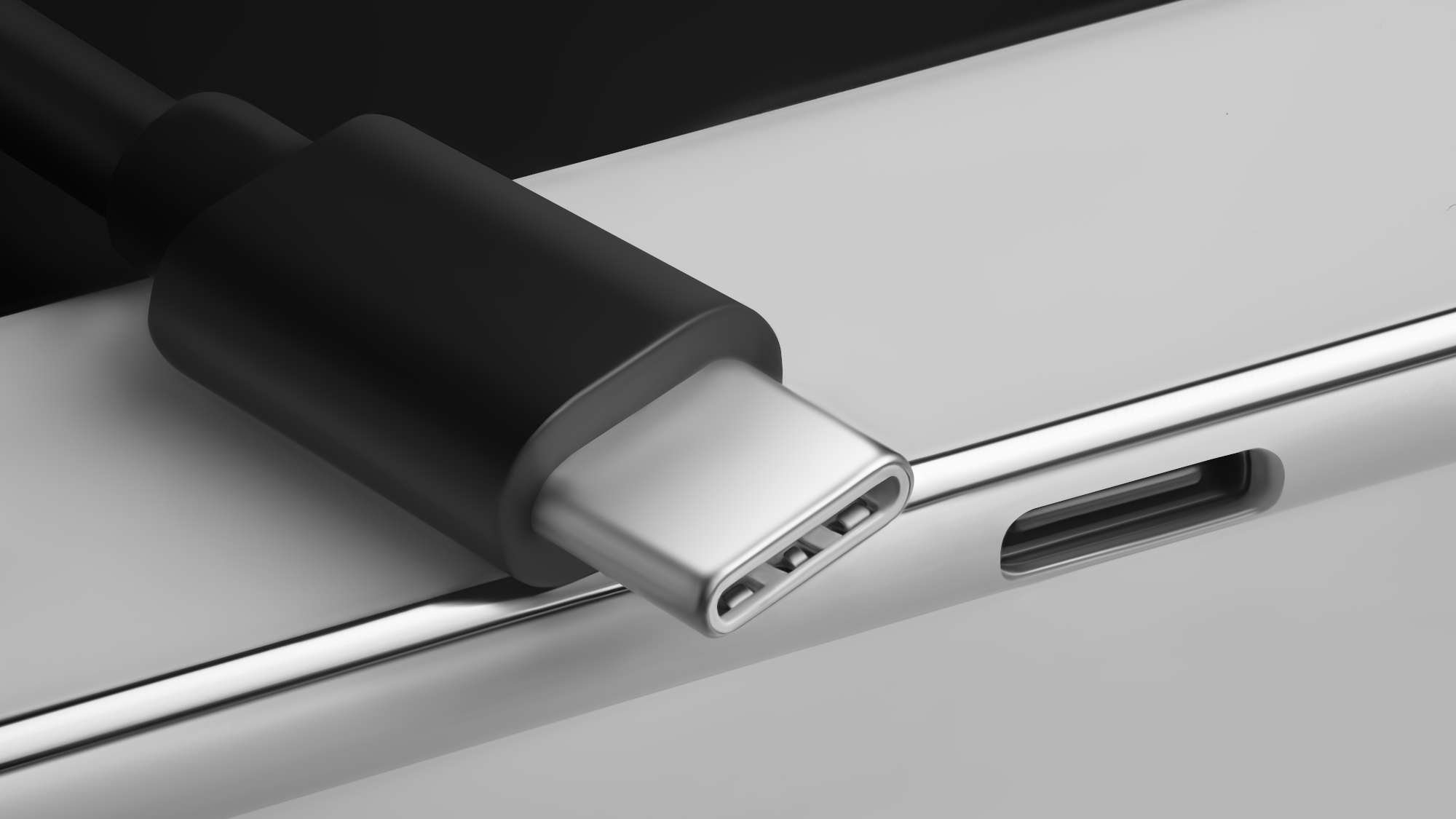
USB-C (or USB Type-C) is slowly becoming the standard port for consumer devices. Near every new laptop, tablet or phone has USB-C connectivity. This is because the connection type fixes many of the problems associated with USB-A. It also has many features that surpass its predecessor.
USB-C ports are smaller and thinner than USB-A. Because of the connector's symmetrical design, you lot don't need to worry about which style you insert the cablevision into a port (thank goodness). With an adaptor, USB-C is backward compatible with USB-A and with diverse connexion types, including HDMI.
Back up for Ability Delivery lets you charge large electronics like laptops via USB-C. SuperSpeed and SuperSpeed+ support (through USB iii.0 and higher) allows for faster data transfer speeds. USB-C is also compatible with Thunderbolt 3 and Thunderbolt four, which is why you'll often encounter laptops and desktops with combo USB-C/Thunderbolt 4 ports -- the port supports either cable.
What the heck is USB 3.0 and above?

USB 3.0 (aka USB iii.1), 3.2 and 4.0 are USB information protocols for USB connections and refer to the information formats the port can handle. In general, the college the number the better, and you lot should be able to tell what version(southward) your USB device supports past looking at the packaging and/or transmission.
Put merely, the more avant-garde versions of the USB protocol allow for faster data and power transfer. Near of us will never care plenty to tell the deviation betwixt USB iii.0 and USB iii.ii, but it's nice to know how it all works.
USB three.0 tin achieve manual speeds of up to 5 Gigabits per second (or 5 Gbps), whereas USB three.ane can achieve upwardly to x Gbps. Still, USB 3.two has two 10Gbps lanes and is thus capable of achieving 20Gpbs.
Both USB-A and USB-C ports can support USB 2.0 to three.ii, which makes the whole thing a fleck confusing since a USB port has both a connector type (USB-C vs. USB-A, or rounded vs. rectangular) and a USB specification which reveals how capable it is.
However, the nigh recent USB 4.0 spec can attain up to 40Gbps and is merely bachelor in USB-C form.
USB-A vs. USB-C: Which is ameliorate?
USB-C is undeniably the superior connection blazon due to its higher data transfer rates, ability to charge large electronics and symmetrical connection port. This is why it is becoming the industry standard and will become ubiquitous in the virtually hereafter. With that said, USB-A isn't completely useless. In some cases, yous may need information technology over USB-C.
At that place are millions of devices that still use USB-A ports. Machines lacking USB-A ports, such as the new MacBook Pro fourteen-inch and Dell XPS 13 Plus, tin put you at a disadvantage if you don't have an adapter. After all, an external HDD or SSD with a USB-A connection won't exercise you lot any practiced if you can't connect it via USB-C. As well, USB-A designed for USB 3.0 is notwithstanding enough sufficient for everyday computing and even transferring large photos or videos, if you lot don't heed investing the time.
And then while USB-C is objectively better than USB-A, USB-A still has its place in the computing world and should be around for several years to come up.

Source: https://www.tomsguide.com/news/usb-c-vs-usb-a
Posted by: cobblemp1940.blogspot.com
0 Response to "USB-C vs. USB-A: What’s the difference?"
Post a Comment